Back-to-School Checklist for Primary Science Leads

The beginning of a new school year is the perfect opportunity to review, refresh and raise the profile of science across your school.
However, being a Primary Science Lead doesn’t mean you need to transform everything during the first few weeks of September. A few carefully chosen actions can make science easier to teach, more visible around school and more exciting for children throughout the year.
Use this simple back-to-school checklist to help you get started.
1. Review Your Science Curriculum
Begin by looking through your school’s long-term science plan.
Check that every year group has clear coverage of the National Curriculum and that children’s knowledge develops as they move through the school. It is also worth checking whether any topics have changed year groups or whether new teachers need support with unfamiliar units.
You don’t need to rewrite the entire curriculum. Instead, identify one or two areas that could be strengthened during the year.
2. Complete a Quick Science Resource Audit
Science lessons become much harder when equipment is missing, broken or spread across several cupboards!
Complete a quick check of your most frequently used resources, including:
Magnets
Batteries, bulbs and electrical components
Measuring equipment
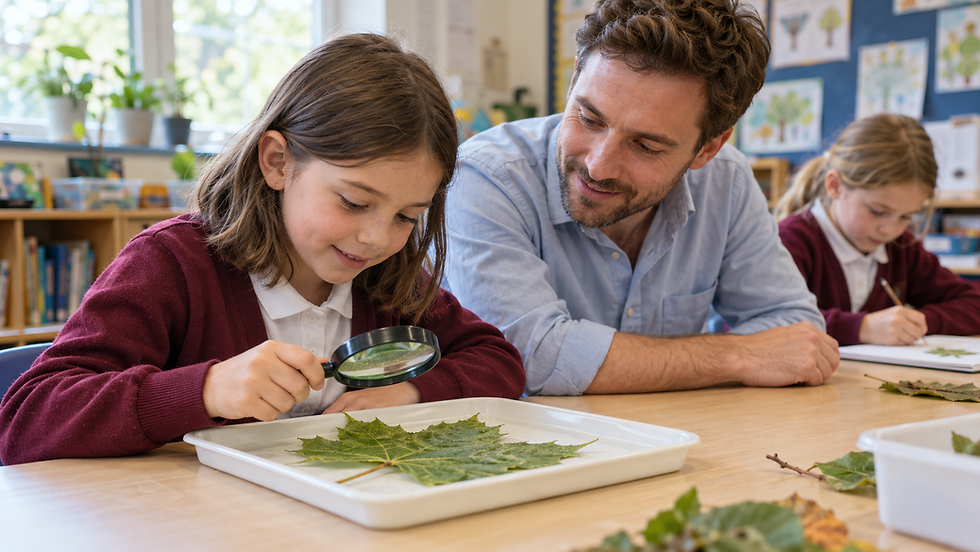
Magnifying glasses
Thermometers
Safety goggles
Trays, containers and investigation materials
Ask teachers whether they experienced any resource shortages last year. This will help you prioritise what genuinely needs replacing without spending the science budget unnecessarily.
3. Refresh Your Science Displays
An engaging science display helps show children, staff and visitors that science is an important part of school life.
Your display could include:
Key scientific vocabulary
Examples of children’s work
Photographs of investigations
Famous scientists
STEM careers
Questions for children to discuss
The different types of scientific enquiry
Displays don’t need to be perfect before the children return. Leaving space for their questions, ideas and work can help create a display that develops throughout the term.
4. Find Out How Confident Staff Feel
Not every teacher feels equally confident teaching science. Some may enjoy practical investigations but feel less secure with topics such as electricity, forces or evolution.
A short staff questionnaire can help you identify where support is most needed. Ask teachers which topics they feel confident teaching, which resources they require and what type of training would be helpful.
Support could be as simple as sharing a useful lesson plan, demonstrating an investigation or introducing one helpful resource during a staff meeting.
5. Give Children a Voice
Pupil voice can tell you a great deal about how science is experienced across your school.
Ask a small group of children questions such as:
What do you enjoy about science?
Which science lesson do you remember most?
What would you like to investigate?
What does a scientist look like?
Would you like more opportunities to take part in science?
Their answers can help you identify strengths, gaps and opportunities. They may also provide some wonderfully imaginative ideas for future lessons, clubs and whole-school events!
6. Add Important Science Dates to the Calendar
Planning early makes it much easier to organise memorable science experiences without creating unnecessary pressure for staff.
Useful dates and events include:
World Space Week – 4 to 10 October
World Science Day – 10 November
British Science Week
School STEM days
Science fairs
Science assemblies
After-school Science Clubs
Your school does not need to celebrate every event. One or two well-planned experiences will often have a greater impact than an overcrowded calendar.
7. Make Science Accessible to Every Child
Think about how practical science can be made inclusive for children with different needs.
Clear visual instructions, carefully chosen group roles, pre-taught vocabulary and alternatives to written recording can help more children participate successfully.
Science provides opportunities for children to observe, build, test, discuss and demonstrate their understanding in different ways. It can be a subject in which children who find other areas of the curriculum challenging are able to flourish.
8. Choose One Memorable Whole-School Experience
Consider choosing one special science experience that every child can enjoy during the year.
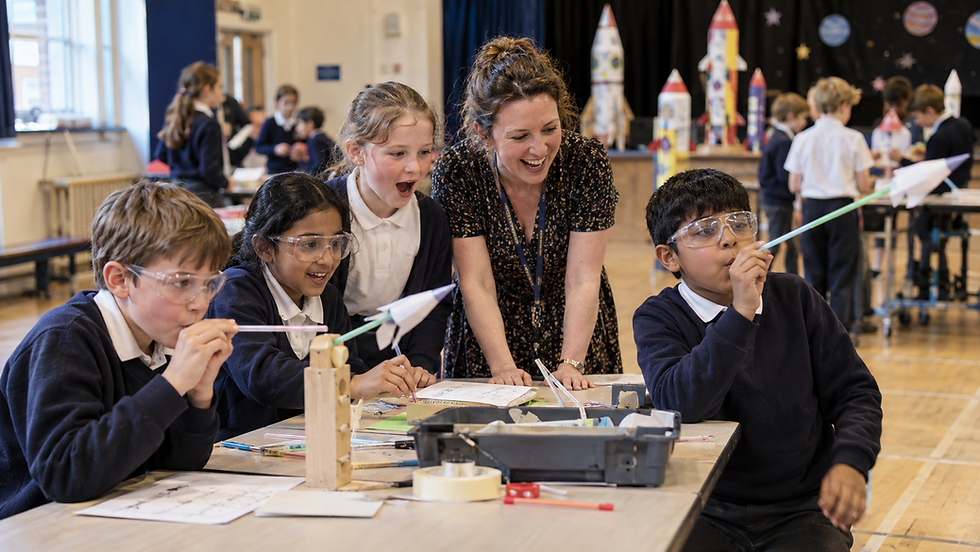
This might be a whole-school investigation, a visiting scientist, a STEM challenge day, a science fair or a ready-to-run Gadget Shop.
The most successful events don’t necessarily require complicated activities or weeks of preparation. Children often remember the excitement of taking part, discovering something new and sharing the experience with the rest of the school.
Start the Year with Curiosity
Your first few weeks as Science Lead should be about setting realistic priorities - not trying to complete everything immediately.
Review what is already working, listen to staff and children, and choose a small number of actions that will make the greatest difference. With thoughtful planning, science can become one of the most exciting, memorable and inclusive parts of the school year.
At Inspire Science Education, we provide free primary science resources alongside ready-to-run Science Gadget Shops and Space Gadget Shops.
Everything is designed to help schools create exciting, hands-on STEM experiences with minimal preparation - and schools can also use their event to raise valuable funds.